
.
GROWING PEAS: Add general purpose fertilizer to the soil. Plant individual plants 4 inches apart or plant groups of 2 or 3 about 6 inches apart. Definitely provide support for taller vines. Even dwarf vines will do better with some support.
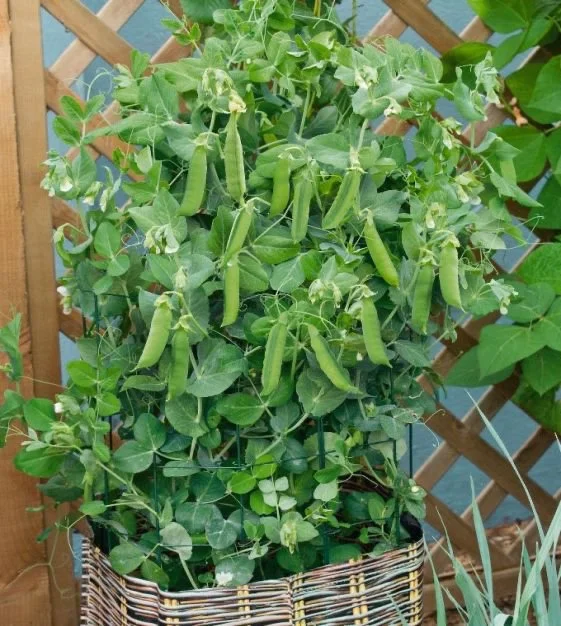
Pea, snap, ‘Patio Pride’
Pea, snap, ‘Patio Pride’
40 days. This petite pea is perfect for patio pots! It grows to just two feet tall on a small tripod, and it produces sweet, tender young pods for several weeks. (OP.)
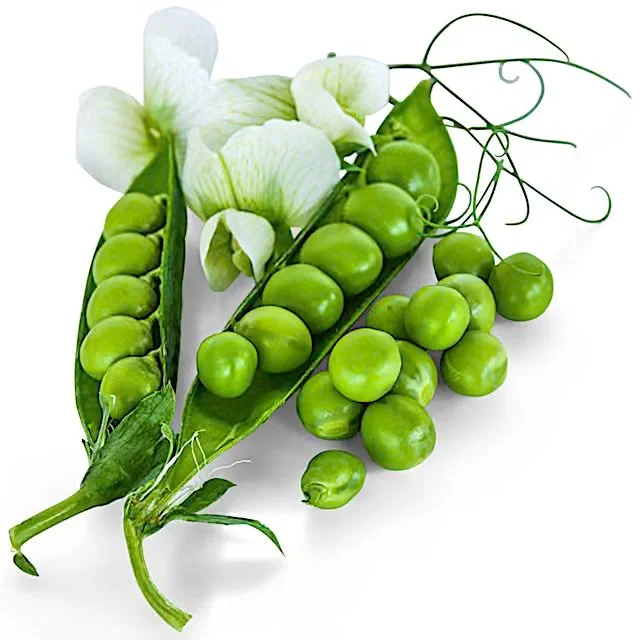
Pea, shelling, ‘Little Marvel’
Pea, shelling, ‘Little Marvel’
Compact, vigorous bush plants grow 20 to 30 inches tall and produce heavy yields of tender, sweetly flavored peas. A dependable heirloom variety from 1908, introduced by Sutton and Sons of Reading, England. This delicious shelling pea resulted from a cross of 'Chelsea Gem' and 'Sutton's A-1'. A true classic.

Oregon Sugar Pod II
Homegrown peas taste so much better than store bought! 'Oregon Sugar Pod II' produces a huge number of 4" delicious snow pea pods that are harvested and eaten when the pods are flat, before the seeds form. Short, 28" vines are easy to manage. Resists mildew, pea enation virus, and leaf roll. Excellent freezer and late-summer variety. Grow on a trellis.
.
Onions
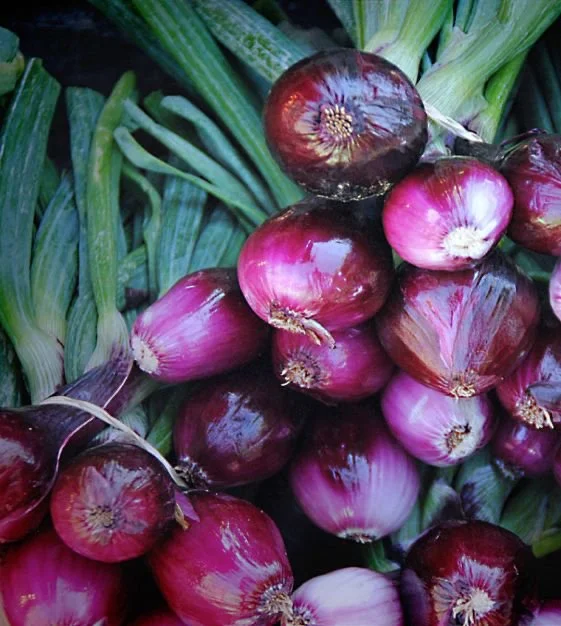
Onion, bunching ‘Scarlet Bandit’
Onion, bunching ‘Scarlet Bandit’
60-80 days. Like a plump red scallion, Scarlet Bandit produces slender white bulbs with wine-red streaks and shanks that are gorgeous sliced into salads, and delicious sauteed in any number of dishes. Their color deepens in colder weather. (OP.)
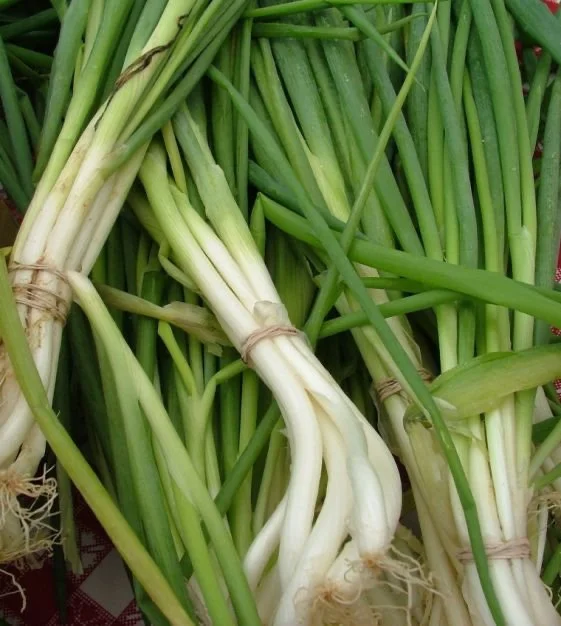
Onion, bunching, ‘Fukagawa Japanese’
Onion, bunching, ‘Fukagawa Japanese’
60-70 days. This slim, straight, non-bulbing variety is most popular with Japanese cooks. It grows easily and quickly and has a wonderful sweet taste: not at all unpleasantly hot like some Scallion varieties. Best used within two weeks of harvest, these ambrosial delicacies are wonderful finely sliced fresh in garden, potato or macaroni salads, dressings, sandwich spreads, crostini toppings and dipping sauces; as a garnish atop soups, chili and tacos; or cooked in savory bread and cheese crumbles atop bubbling casseroles, California-style pizza toppings and in stir-fries. For a caramelized treat, brush these sweet, sugary beauties with olive oil and grill over low heat for two to three minutes. These sweet beauties brown in minutes because of their high sugar content. (OP.)
.
Swiss chard
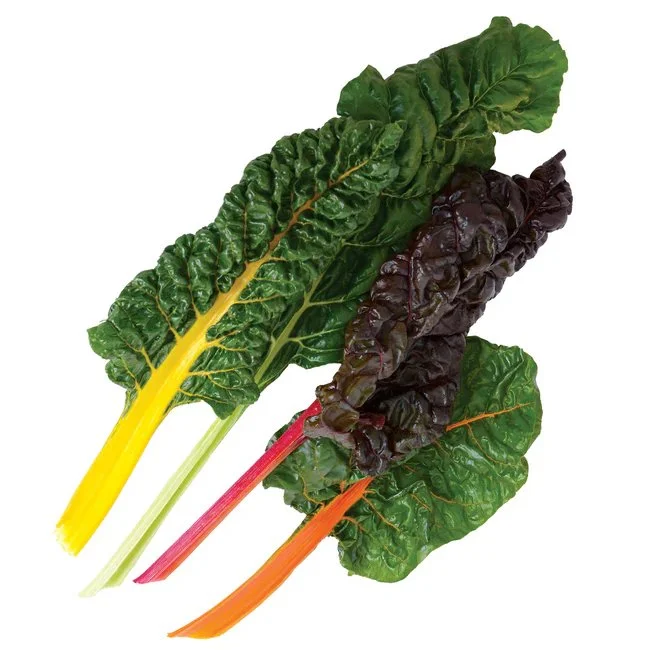
Swiss chard ‘Bright Lights’
Swiss chard ‘Bright Lights’
60 days. Individual stems are red, yellow, orange, gold, or white, and together they create a visual feast in your ornamental beds, in your vegetable garden, and at your dinner table. Bright Lights has lightly savoyed leaves, some are burgundy and some are green. Very mild flavors. These 20 inch wonders are a colorful accent for any meal! Open pollinated variety.
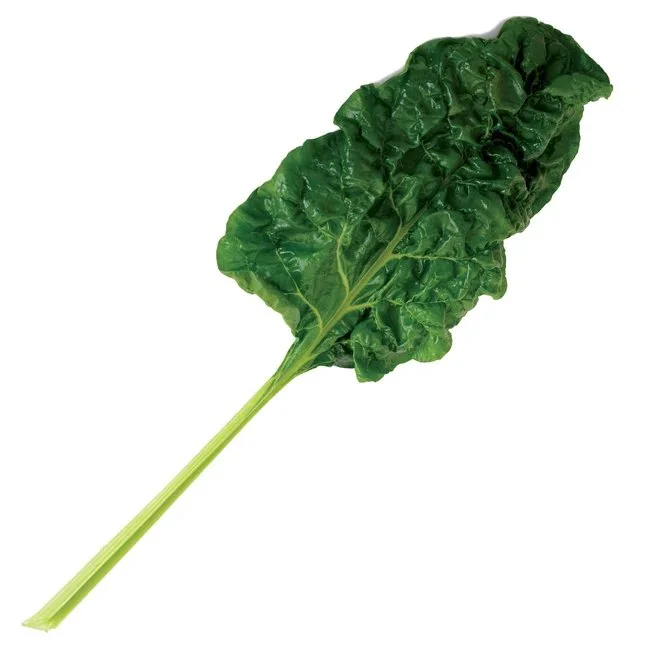
Swiss chard, ‘Fordhook Giant’
Swiss chard, ‘Fordhook Giant’
60 days. A staple for delicious fresh greens since the 1920s, this mammoth strain reaches a full 2 feet tall, easily one of the largest Swiss chard varieties we’ve grown. Heavily puckered, fleshy leaves emerge with mint green stalks and quickly mature to a pure ivory color. The stalks and leaves are loaded with nutrition and fiber. This selection is a dependable all-season producer. Open pollinated variety.
.
Kale
Plant kale 12 to 18 inches apart.
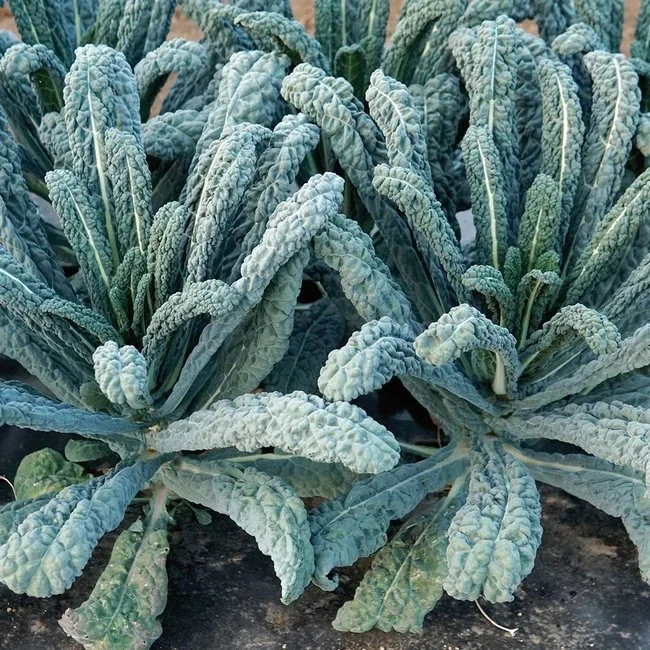
Kale, lacinato, ‘Ebony’
Kale, lacinato, ‘Ebony’
62 days. Enjoy a long season of hearty, fresh greens with this new, bolt-resistant lacinato. Ebony’s compact habit and deeply puckered, thick leaves are a great fit for the late fall and early spring gardens, as the cold-tolerant plants are built for hunkering down under a blanket of snow. At 22 inches tall, they produce a continuous harvest of richly colored, dark slate-blue leaves for soups, stews, salads and more.
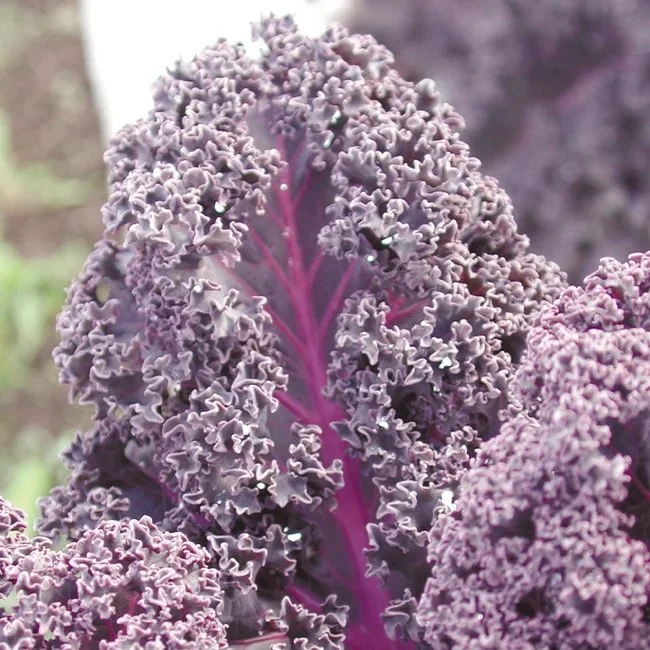
Kale, curly, ‘Redbor’
Kale, ‘Redbor’
50 days. Wow, a completely magenta kale! This vigorous, cold-hardy, edible landscape plant is both beautiful and tasty. Mild and crisp, this finely curled kale adds a flash of color to salads. Redbor grows 18-24 inches tall. F1 hybrid variety.
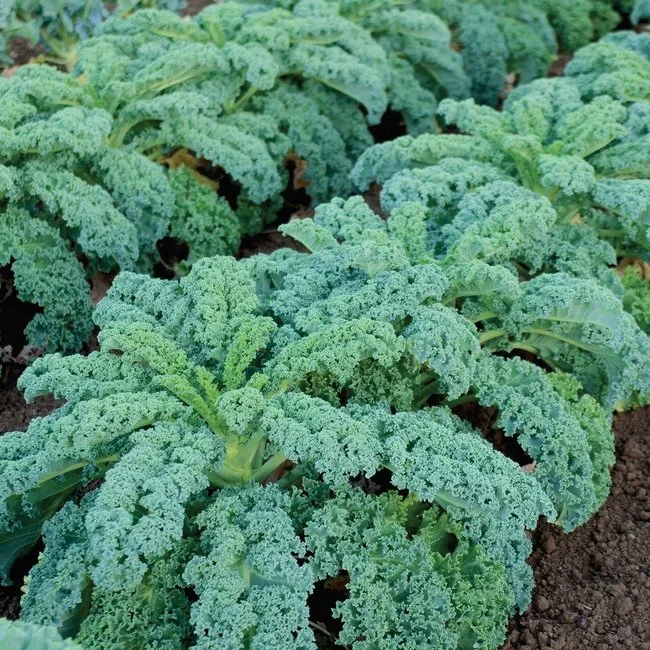
Kale, curly, ‘Winterbor’
Kale, ‘Winterbor’
60 days. One of the most winter-hardy kales, Winterbor has finely curled, thick, blue-green leaves. Very vigorous, it can grow up to 2 feet, developing an abundance of ruffled leaves. A magnificent early spring and late fall kale. F1 hybrid variety.
.
Sprouting broccoli
Plant sprouting broccoli 18 to 24 inches apart and set in the soil up to the first set of leaves.
BE SURE TO PROVIDE A STAKE TO SUPPORT YOUR BROCCOLI PLANTS while they get started growing in your garden. They need a bit of help at first but will get sturdy and bulk up soon.
Side dress with about a half cup of balanced fertilizer at time of planting.
Keep soil evenly moist.
You may want to use floating row covers or insect netting early on to block cabbage moths and aphids.
Provide cover if temperatures dip below 20 deg. F.
Planted in late summer and left to overwinter in the field, plants will produce an abundance of tender stems with bright purple sprouts starting in late February and producing through early May. (‘Rudolph’ may produce as early as mid December.)
Remove the central head to encourage more side sprouts. Harvest side sprouts regularly to encourage more production.
During the winter fully mature leaves can also be harvested and eaten like kale (they are incredibly sweet and taste like broccoli, of course), providing additional fresh nutrition and food throughout the cold months.
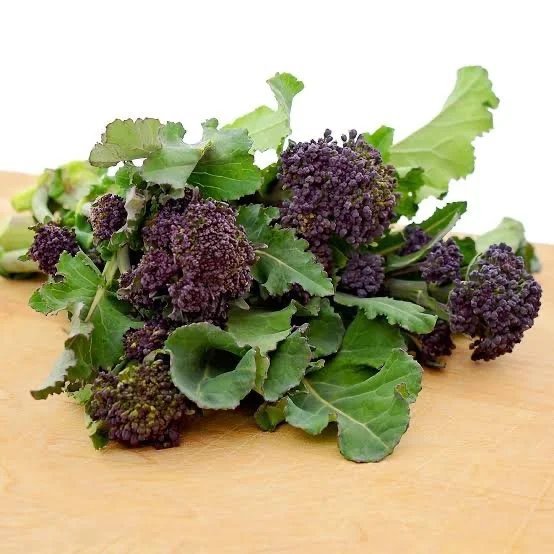
Broccoli, sprouting, ‘Rudolph’
Broccoli, sprouting, ‘Rudolph’
150 days. Now you can enjoy fresh broccoli for the holidays with this winter sprouting variety. Rudolph is an English favorite because it is ready for harvest long before later maturing sprouting broccoli. Can be planted in mid-July to produce an abundance of full-flavored spears by mid-December. If you haven’t grown sprouting broccoli before, this is the one to try! Open pollinated variety.
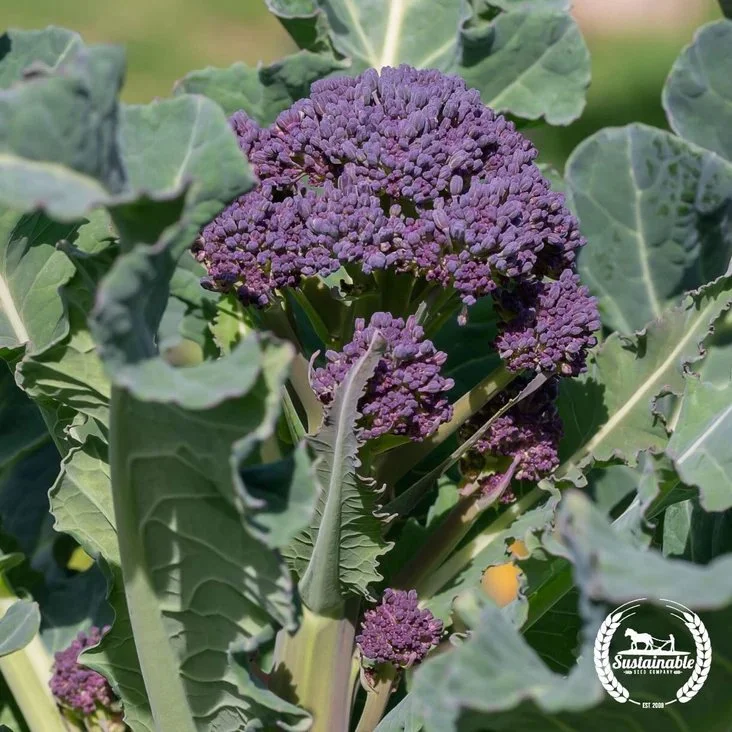
Broccoli ‘Purple Sprouting’
Broccoli ‘Purple Sprouting’
220 days. Maturing in March/April when fall planted, these tall 24-36 inch plants are covered with petite, very sweet tasting purple crowns that turn green when cooked. Hardy to below 10°F, Purple Sprouting is a delicious mainstay of the family spring food supply.! Open pollinated variety.
.
Lettuce
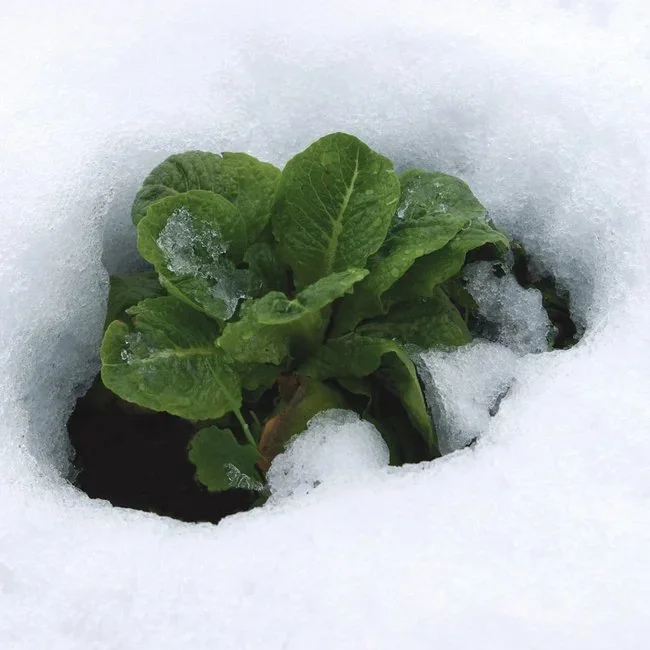
Lettuce ‘Winter Density’
Lettuce ‘Winter Density’
54 days. Winter Density is an early, compact romaine. Its dark green leaves with an upright growth habit build an 8 inch tall, densely packed head. You can count on Winter Density to be delectable, and it holds well at the market, too. Quite bolt resistant and suited to all sowing dates. Open pollinated variety.
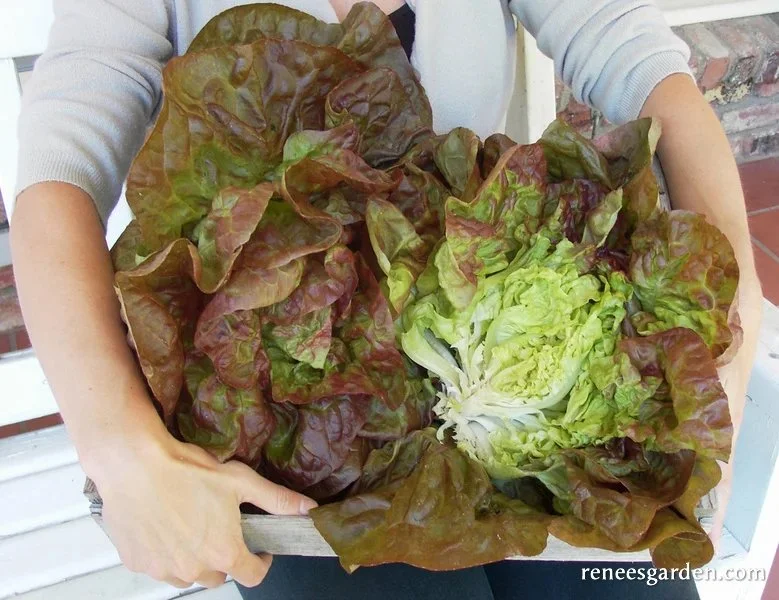
Lettuce, ‘Merveille des Quatre Saisons’
Lettuce, ‘Merveille des Quatre Saisons’
50-60 days. This exquisite Lettuce is also known as Continuity: an open-pollinated heirloom variety introduced by French seedsmen at Vilmorin in the l880s. Merveille des Quatre Saisons is a soft Butterhead type; with distinct, loosely cupped pale leaves tinged with shades of ruby, rose-pink and bronze surrounding a tender, pale yellow-green heart. It really is a Lettuce for sowing in practically all seasons and ideal for baby greens. Appealing and decorative, this rustic Butterhead is an easy-growing must for your potager garden. Open pollinated variety.
.
Spinach
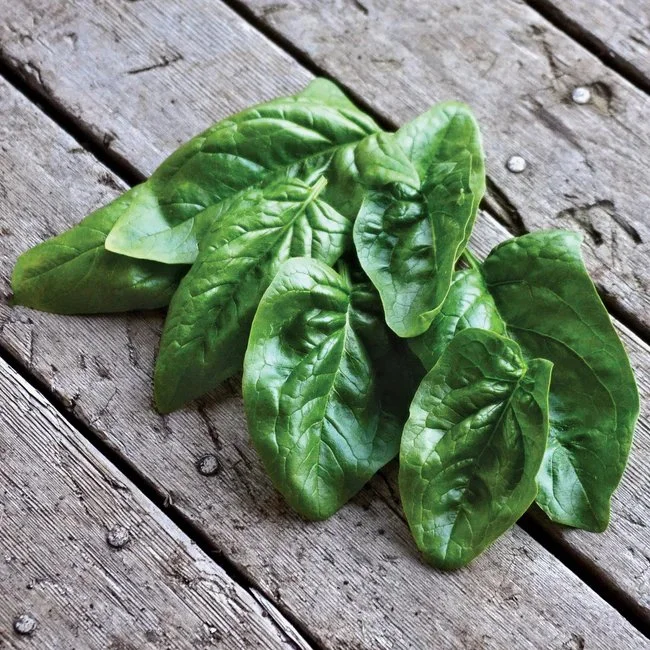
Spinach, ‘Giant Winter’
Spinach, ‘Giant Winter’
45 days. A special strain bred specifically for late summer and fall seeding for a crop in early spring. The large, dark green leaves are smooth, semi savoyed and flavorful. Wonderful steamed, or excellent in fresh spinach salads. Remarkably cold hardy, and stands well in all but the worst weather we experience here in the Northwest. Open pollinated variety.
.
Arugula
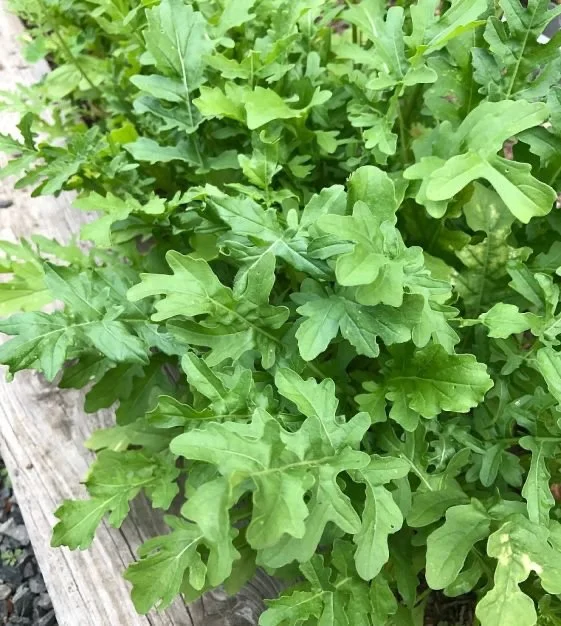
Arugula ‘Runaway’
Arugula ‘Runaway’
20-40 days. A unique, dark green, serrated-leaf variety, Runaway is similar in appearance to rustic or wild arugula, but grows extraordinarily fast and is amazingly productive. It has a zingy, peppery flavor that doesn't even come close to being bitter, even when mature. Its erect, compact plants are also bolt-resistant. Open pollinated variety.

Arugula ‘West Bred’
Arugula ‘West Bred’
Originally saved from Bret Grohsgal's Ice Bred Arugula, a nutty, cold hardy, pungent arugula which moved west in 2015, where we have been saving it since each year in Chimacum. (Saltwater Seeds)
.
Tatsoi
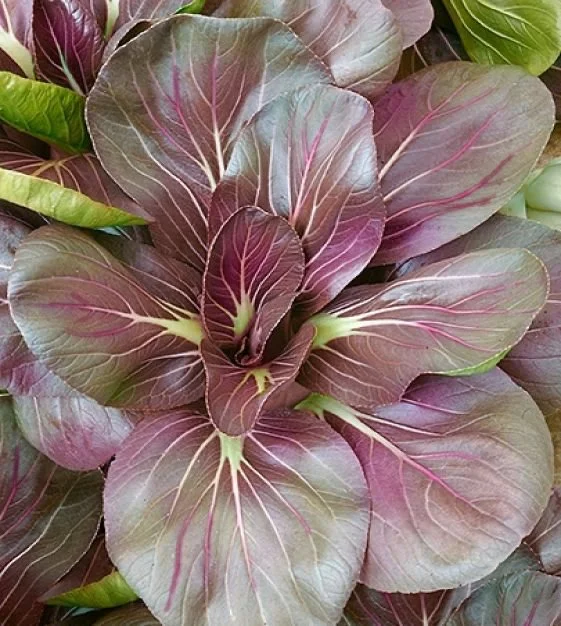
Red Tatsoi
Red Tatsoi
35-50 days. Smooth, rosy red-green with striking pale green veins. Open pollinated variety.