
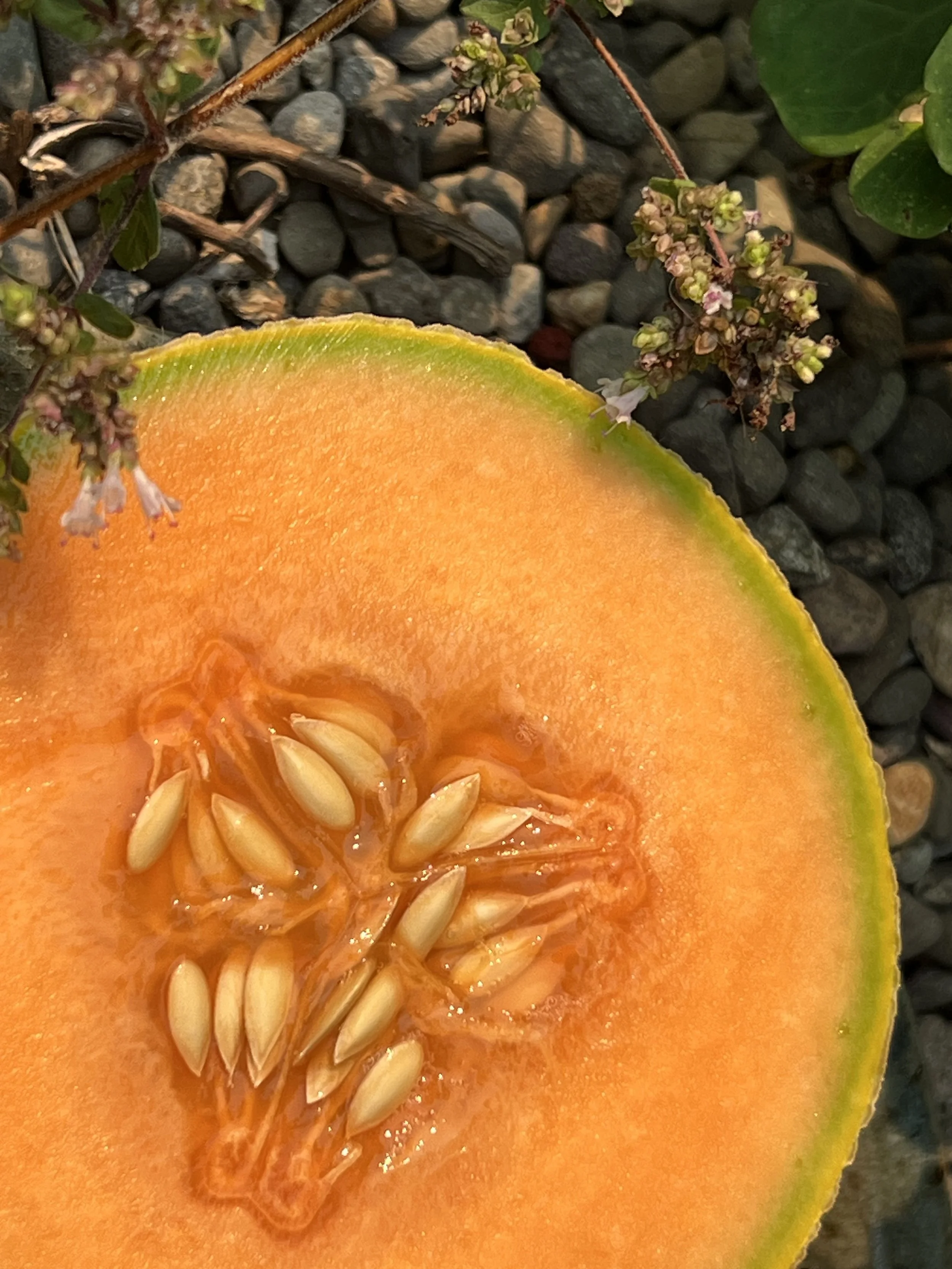
Growing melons
Space individual plants 3 to 6 feet apart (3 feet for compact varieties). These space recommendations are for in-ground planting. In my EarthTainers, I crowd the plants and still get a good harvest.
I discovered last year that rabbits like melon leaves, so beware!
Before planting, add some general purpose fertilizer and compost to the soil.
Melons love warm weather! I have had the most success growing them in sub irrigated containers such as Earthbox or EarthTainer. That way, the roots are warm, the vines have plenty of water at all times, and you can place the container where it will receive the most sun. Otherwise, raised beds or very large pots would be best to ensure root warmth.
The melon varieties I am offering have been bred to produce well in our area.
Harvest: Canteloupe types will slip easily from the vine when ripe. With other melons, check the leaf nearest the fruit; when it begins to turn yellow, the fruit is ripe. For watermelons, they are ripe when the tendril nearest the fruit is dry and brown and the bottom side of the fruit is yellow. Harvest melons in the cool of the morning and immediately refrigerate. Melons do not ripen off the vine.
PLEASE NOTE: The plants on my farm table have NOT been hardened off. They are straight from the greenhouse.
You can do one of the following:
1. Expose them gradually to outdoor conditions over a week
-OR (as I do)-
2. Plant them immediately and give them protection from excess sun, wind, and rain for a week or two.
2026
(Descriptions and photos are from the seed company websites unless otherwise noted.)
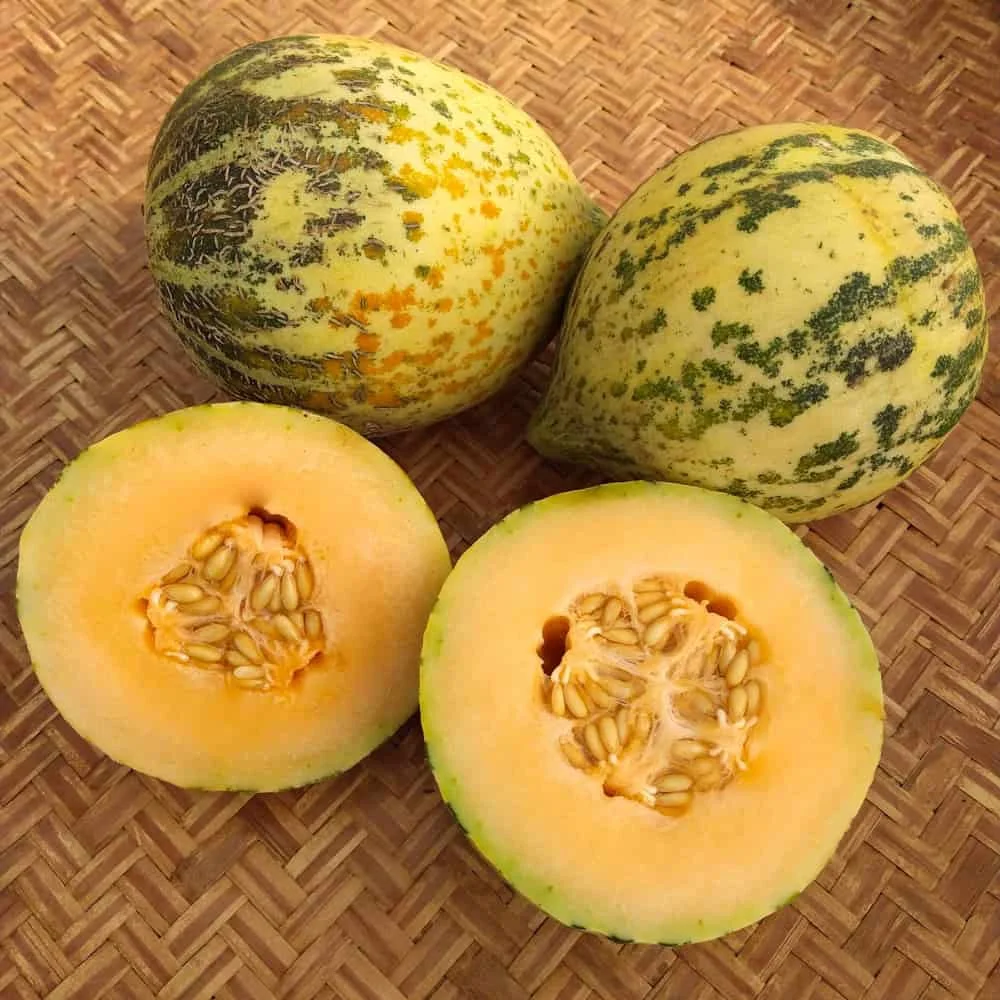
Sweet Freckles
Melon, Sweet Freckles
Cucumis melo. 80-90 days.
Unique and delightful, Sweet Freckles Melon has a sweet aromatic flavor with a smooth, dense texture. Unusual and attractive appearance, which is pear-shaped and freckled. Vines are exceedingly vigorous and while the stem does not slip when ripe, the color changes from green to orange. Not the earliest melon but it manages to beat the occasionally cool Oregon summer. An early Crenshaw type with a more durable skin and slightly smaller size. Related to, but not the same as, Eel River or Crane melon. Bred by Tim Peters of Peters Seed and Research in Oregon, who told us that his wife only wants him to grow this melon because it tastes so much better than the rest. We nearly lost this one altogether as it was unavailable commercially for some time. But thanks to some very old seed from Tim and a few from Amy Goldman, this wonderful melon is saved! (Adaptive Seeds)
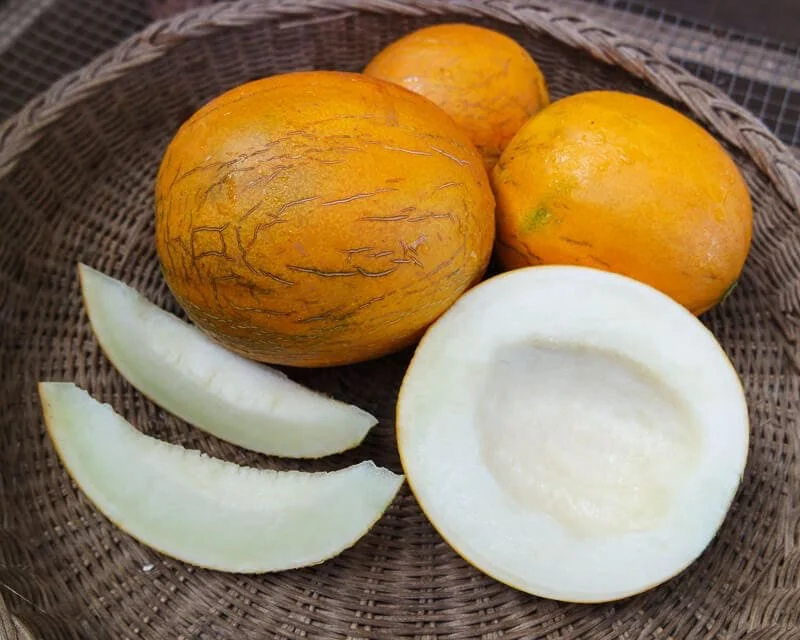
Kazakh
Melon, Kazakh
Cucumis melo. 70-80 days.
Small, green-skinned melons ripen to vibrant gold and have firm, very pale cream flesh with an almost honeydew crunchy consistency. Up to five softball-sized fruit per plant. Super tasty, early variety that is good for cool, short seasons or for folks that are getting their garden in a bit late. Very sweet when picked at the peak of ripeness, keeps well after harvest. We highly recommend it. Originally from Kazakhstan, as the name suggests. (Adaptive Seeds)
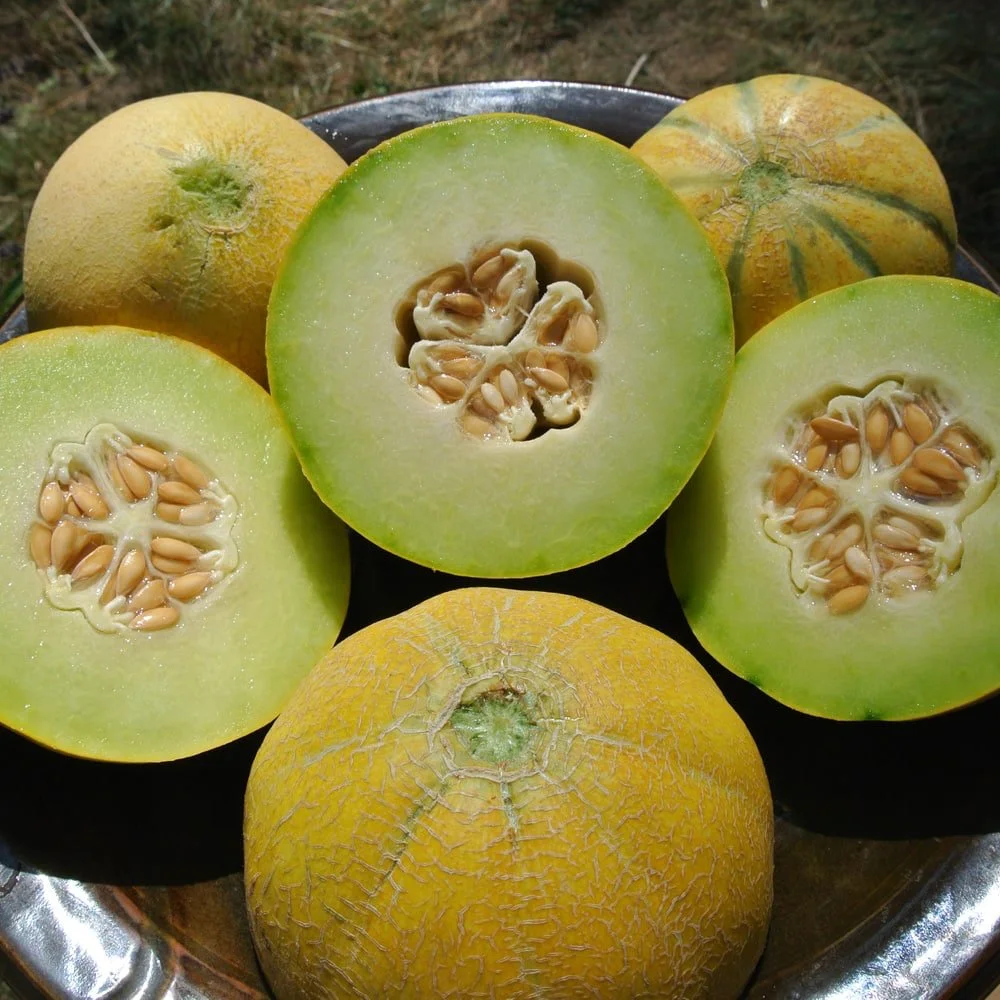
Farthest North Galia
Melon, Farthest North Galia
Cucumis melo. 65 days.
Our selection from the Farthest North Mix that has been in the making since we crossed Galia F1 into the mix over 9 years ago. Still a genepool mix that has been selected for small, round, green-fleshed melons. Our goal is to breed a small fruited super early, super sweet galia/passport/tropical type melon. The color and size are mostly stable so far, however the rind style and flavor profile is still variable. Some taste a lot like the galia-type and some still have a charentais-like flavor, which is also good. A modern landrace that can still be selected by all you seed savers to create many new varieties. This most recent selection included collaboration with chef Tiffany Norton of Party Downtown in Eugene, Oregon, as part of the Culinary Breeding Network. Here’s to open source genetics! (Adaptive Seeds)
Below are varieties offered in 2025. Some may also be available this year. I’m still working on updating the site.

Watermelon ‘Mini Love’
Mini Love Hybrid
Watermelon
Compact plant, delicious fruit
All-America Selections (AAS) Winner 2017
This award-winning hybrid is super compact, so instead of the usual sprawling vines, you get a compact 3-foot by 3-foot spread, healthy foliage and flowers, and up to half a dozen delicious fruit on every plant.
The secret is terrific disease resistance. Mini Love stands up to anthracnose, a scourge of many other watermelon varieties, and the fruit has a thin rind that is strong enough to resist cracking and splitting. Within, the flesh is juicy sweet, dark red, aromatic, and simply mouthwatering.
Mini Love sets about 4 to 6 striped green-on-green melons per plant. Each weighs between 7 and 9 pounds, with a shape that varies from oval to round. Saves space in the garden (or on the patio) with smaller, more manageable fruit. Mini Love is out to win you over. (Renee’s Garden)

Melon ‘Tasty Bites’ (WILLS FARM photo)
Tasty Bites
Charantais/Ananas
70-80 days. Delightfully sweet with a tropical twist, these mini melons are just right for 2 servings. The hard-working plants offer high yields of one pound, pale yellow-skinned melons with deep orange flesh offset with a green outer ring. Developed from a Charantais/Ananas cross, bringing out the best in both! F1 hybrid variety. (Territorial Seed)
These melons have produced very well for me and are the most delicious sweet flavor! I will be planting ‘Tasty Bites’ every year.

Here at WILLS FARM
I have finally progressed
beyond the 18th century
(when USA currency was first produced)
and now accept donations via Venmo!
Click on the Venmo logo or the button above
to connect to my account
@willsfarm
Of course, cash is always accepted
(and appreciated)
when my donation box is out!
Thank you for your continued support in donating to help me purchase seeds and supplies.
— Sherry —