
Looking for sunflowers? Go to the sunflower page.
2026
(Descriptions and photos are from the seed company websites unless otherwise noted.)
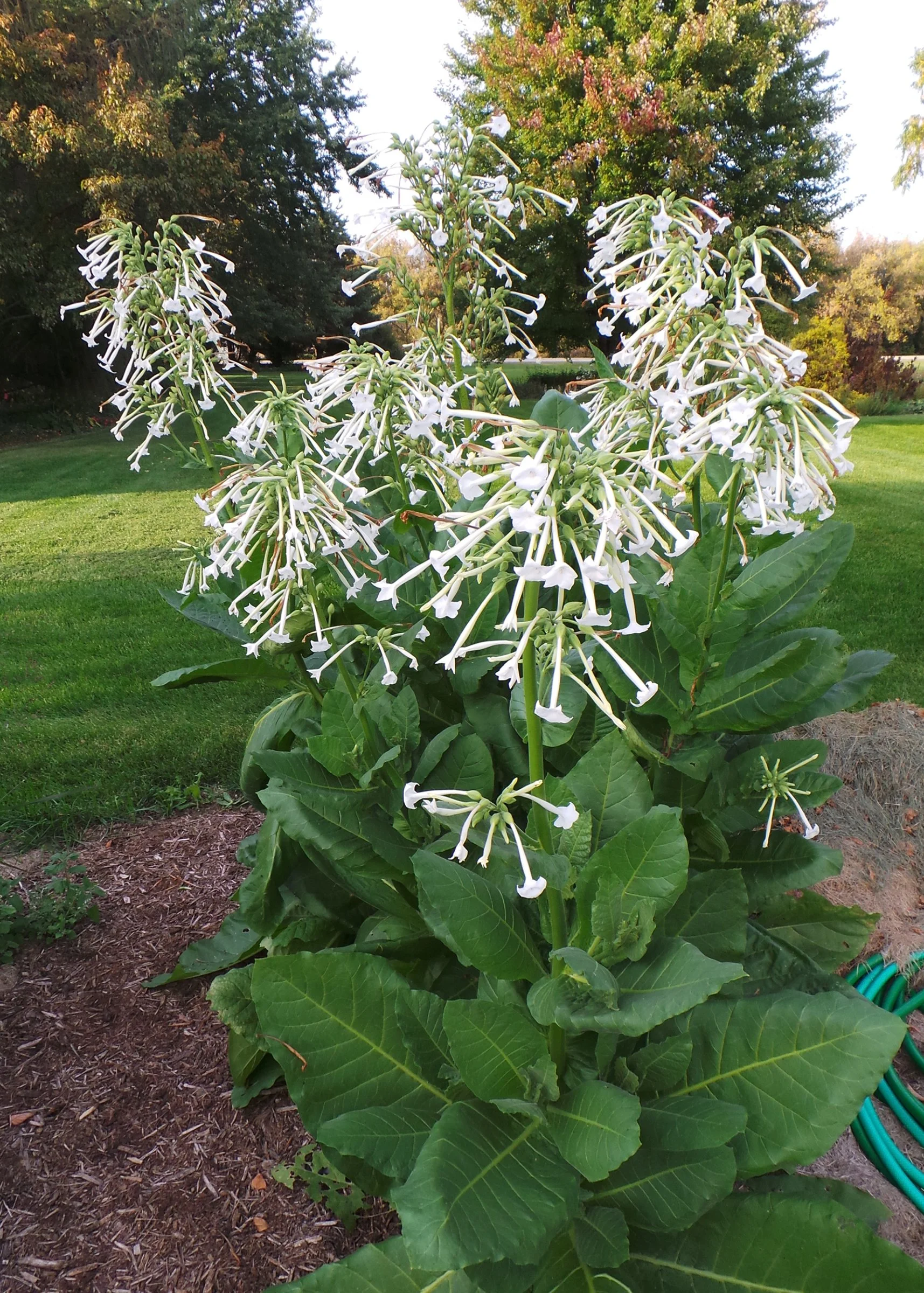
Nicotiana sylvestris (flowering tobacco)
Nicotiana sylvestris (flowering tobacco)
From University of Wisconsin Horticulture Division of Extension:
Nicotiana sylvestris features large, dramatic leaves and showy, fragrant clusters of pendent white flowers that look like a burst of fireworks. Native to northwestern Argentina, this short-lived tender perennial is only hardy to zone 10 (although it may survive further north if protected) and grows so rapidly that it is generally used as an annual. (Portland, Oregon, is Zone 8b.)
It will grow to a height of 3-5 feet and spread up to 2 feet across at the base. Wide, oblong leaves up to 18 inches long are produced in a dense basal rosette. In partial shade, leaves will be much larger and deeper green than plants grown in full sun, which may look almost chartreuse.
In midsummer the plant produces a central flower spike that grows rapidly several feet tall. The stems and root systems are strong enough that the plants can lean at severe angles without toppling over or requiring staking, although branches can break at the base in strong storms or under very windy conditions.
Pendant clusters of pure white to cream, tubular flowers are produced any time from June until the first frost. The main stem may be many-branched, producing multiple loose clusters of flowers. The flowers emit a strong, sweet, jasmine-like scent especially in the evening to attract their sphinx moth pollinators (although they probably are not required as plants exhibit high levels of self-pollination). Each flower has a long tube with a flared, star-shaped end. The flower clusters can be cut to use in fresh flower arrangements.
Nicotiana sylvestris grows best in full sun but will tolerate partial shade. It thrives in all types of soils, has moderate moisture requirements but prefers humus rich soils, so amend planting sites generously with compost or other organic materials.
The tips of the first flower spikes can be pinched out to promote branching and more flower clusters. Deadhead spent flower clusters to encourage more blooms and reduce self-seeding. When growing in windy areas or unsupported by other plants, these tall plants may need staking. If the soil is not particularly fertile, feed regularly to support their substantial growth.
Landscape Use of Flowering Tobacco
Use flowering tobacco in masses at the back of the annual or mixed border as a stunning backdrop for smaller plants, as a tall accent plant, or in a large mixed container. Its bold architectural presence complements almost any garden style from tropical to traditional. Flowering tobacco is right at home in the cottage garden and is a natural for a moon garden. Position the plants where their delightful fragrance can be appreciated in the evening.
Combine them with other tall, late-summer bloomers such as cleome, cosmos (Cosmos bipinnatus), Verbena bonariensis, late-blooming shrub roses, and ornamental grasses. It is also a good choice for filling in gaps left by spring bulbs or spring blooming perennials that go dormant later on, such as Oriental poppy (Papaver orientalis). Their large leaves provide coarse texture, contrasting with other plants with small leaves or fine texture.
Nicotiana sylvestris will seed itself in the garden, but I have not found it to be invasive.
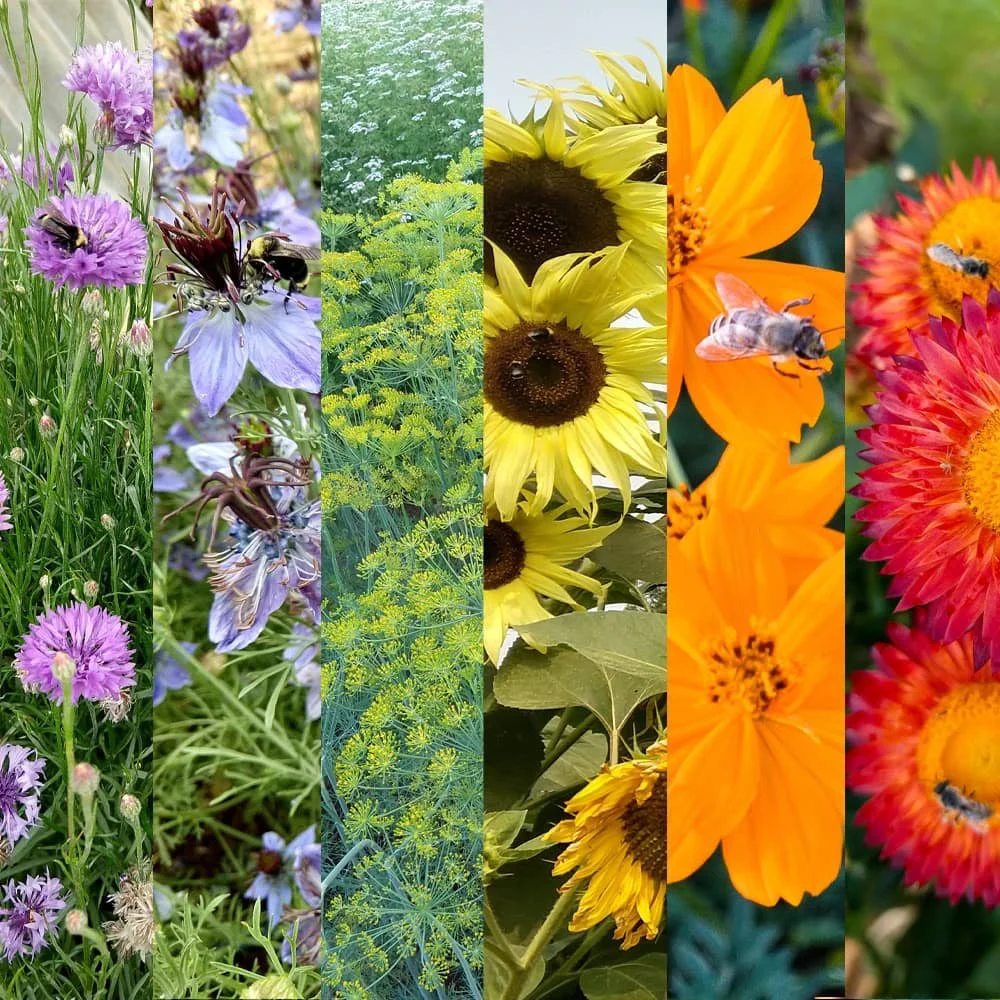
Pollinator Party Mix
Pollinator Party Mix
Plant this mix at the edges of your garden to feed pollinators and invite beneficial insects of all kinds. Blooms start early with cilantro and dill and continue through frost. Several of these crops provide good bird food, too. Mix includes sunflowers, zinnias, tithonia, coreopsis, cilantro, fennel, parsley, dill, and others. (Adaptive Seeds)
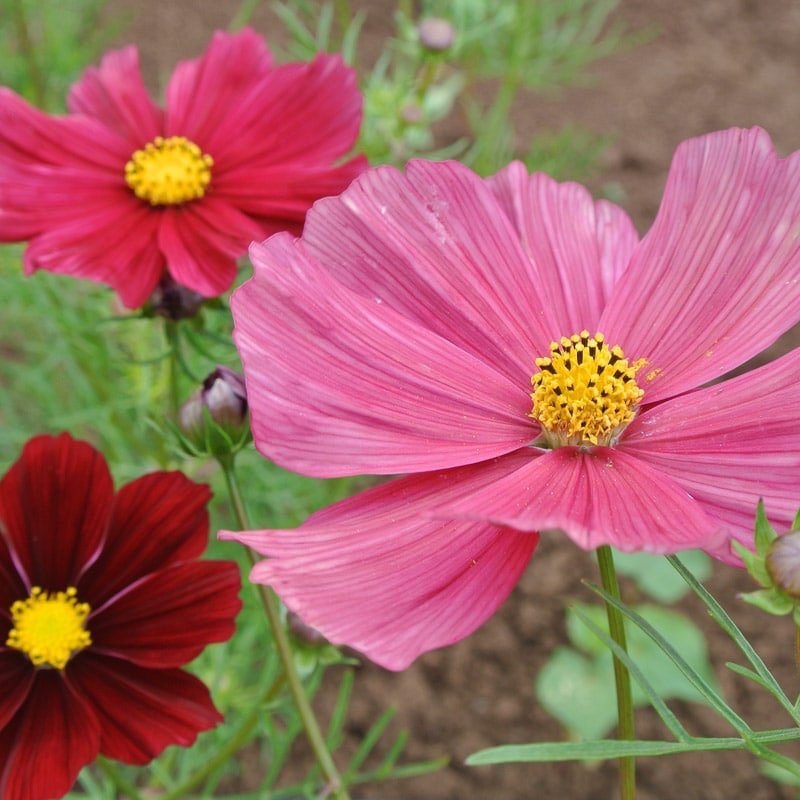
Cosmos, rubenza
Cosmos, rubenza
A dynamic flower that changes color as it matures, from a deep wine maroon to a muted rose, with many shades in between. Single flowers with yellow centers appear atop ferny foliage. Upright plants grow to about 3 ½ feet, making Rubenza shorter than most cosmos so they do not need staking. Begins flowering early and continuously until frost, long stems make for a good cut flower. Winner of a Fleuroselect Novelty Award in Europe, but humans aren’t the only ones to appreciate these lovely flowers; many beneficial insects enjoy them while in bloom and birds happily munch on the seeds. This is one we want to grow every year. (Adaptive Seeds)
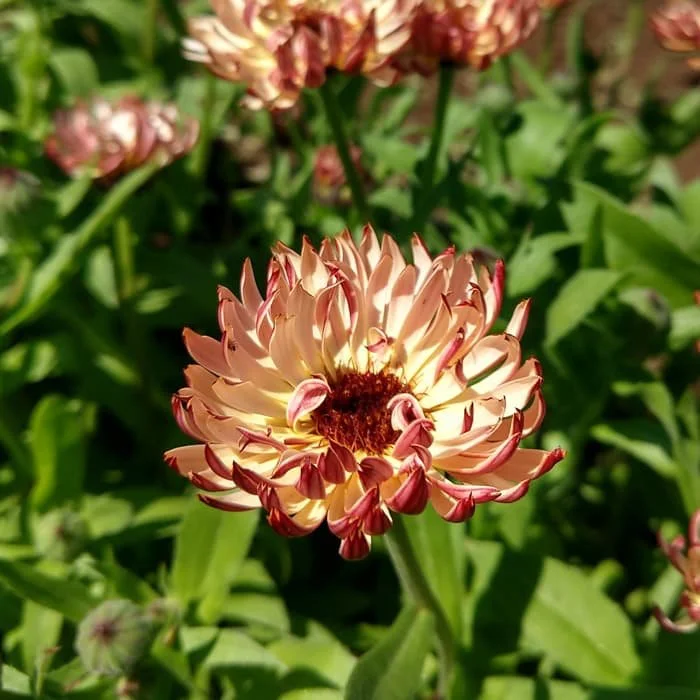
Calendula ‘Bronzed Beauty’
Calendula ‘Bronzed Beauty’
Pale peach with some copper undertones, Bronzed Beauty Calendula offers a unique coloration when compared to the standard orange and yellow calendula color spectrum. Petals are cream on the top and coppery red on the back. Flower center is a nice chocolate brown. This variety is great for people who want some of the medicinal qualities of calendula but prefer a more muted flower palette. Flowers are a little smaller than most calendulas, but have long stems and make a good cut flower. Plants grow to 18”. Flowers begin early and continue late into the season, especially if deadheaded. Deer resistant. Aka, Bronze Beauty. (Adaptive Seeds)
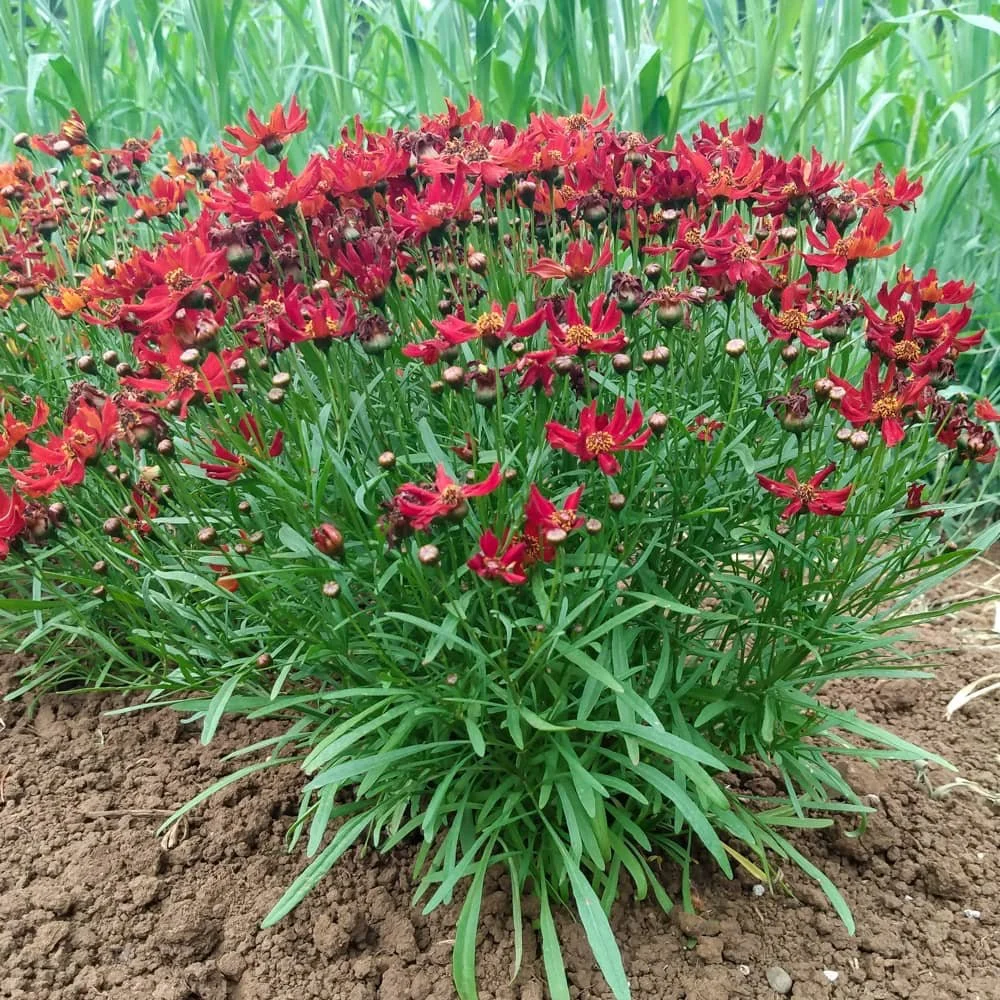
Dwarf red coreopsis
Dwarf red coreopsis
Coreopsis tinctoria.
Annual coreopsis with dark red blooms. These small plants grow to about 1′ in all directions. They fit perfectly in tight spaces where a splash of color is desired, and look great in a pot on the porch. We like that the plants care for themselves with little help, and are very attractive to pollinators. Unlike the wild Tall Plains coreopsis, Dwarf Red is a quick bloomer and eager to get the flower party started. A North American native wildflower also used as a dye plant. Heat loving and drought resistant. Aka, Calliopsis, Tickseed. (Adaptive Seeds)
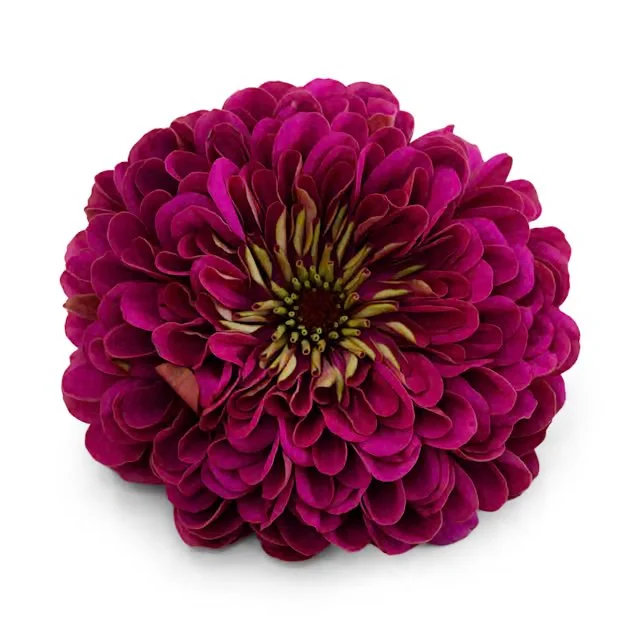
Zinnia ‘Purple Prince’
Purple Prince
(Zinnia elegans). Annual. 60-70 days. Dahlia-flowered type is one of the tallest we've seen (30 to 40 inches tall)! The blooms are extra large and brilliant amethyst-purple with pale green centers. Wonderful for cut flowers and a lavish display in the garden, especially planted en masse. Beloved in gardens since 1949. Fabulous! (Baker Creek Heirloom Seeds) This seed was a gift from the supplier.
Below are varieties offered in 2025. Some may also be available this year. I’m still working on updating the site.

Rudbeckia ‘Prairie Sun’
Rudbeckia ‘Prairie Sun’
Rudbeckia hirta This AAS and Fleuroselect winner has impressed judges all across America and Europe. Once you see this rudbeckia, you'll know why. Very large 6 inch distinctive flowers with light yellow tips on golden petals encircle a green center. Branching 28–32 inch plants have long stems, ideal for cut flowers. Easy to grow and maintain. Annual. Full sun. (Territorial Seed)

Rudbeckia ‘Sahara’
Rudbeckia ‘Sahara’
Rudbeckia hirta A blend of brunette, warm cinnamon, golden flax, cabernet and rosy salmon, these exquisite, mostly semi-double blooms capture the hues of a summer sunset. Compact, upright plants reach about 20 inches tall and 12 inches wide for placement in the front of the border or large container. The rich palette makes stunning displays with vibrant reds and purples or wherever you need a sultry touch. Annual. Full sun. (Territorial Seed)

Cosmos ‘Apricotta’
Cosmos ‘Apricotta’
Cosmos bipinnatus This award-winning introduction shines with big, peach-colored, single blooms highlighted in iridescent, hot pink. Tall, floriferous plants reach 40 inches high for a head-turning floral display in the garden and the vase.
Cosmos like full sun. Their peak blooming time is typically mid to late August, the overall season beginning late July and lasting into September. Many of the varieties we offer are great cutting flowers. (Territorial Seed)
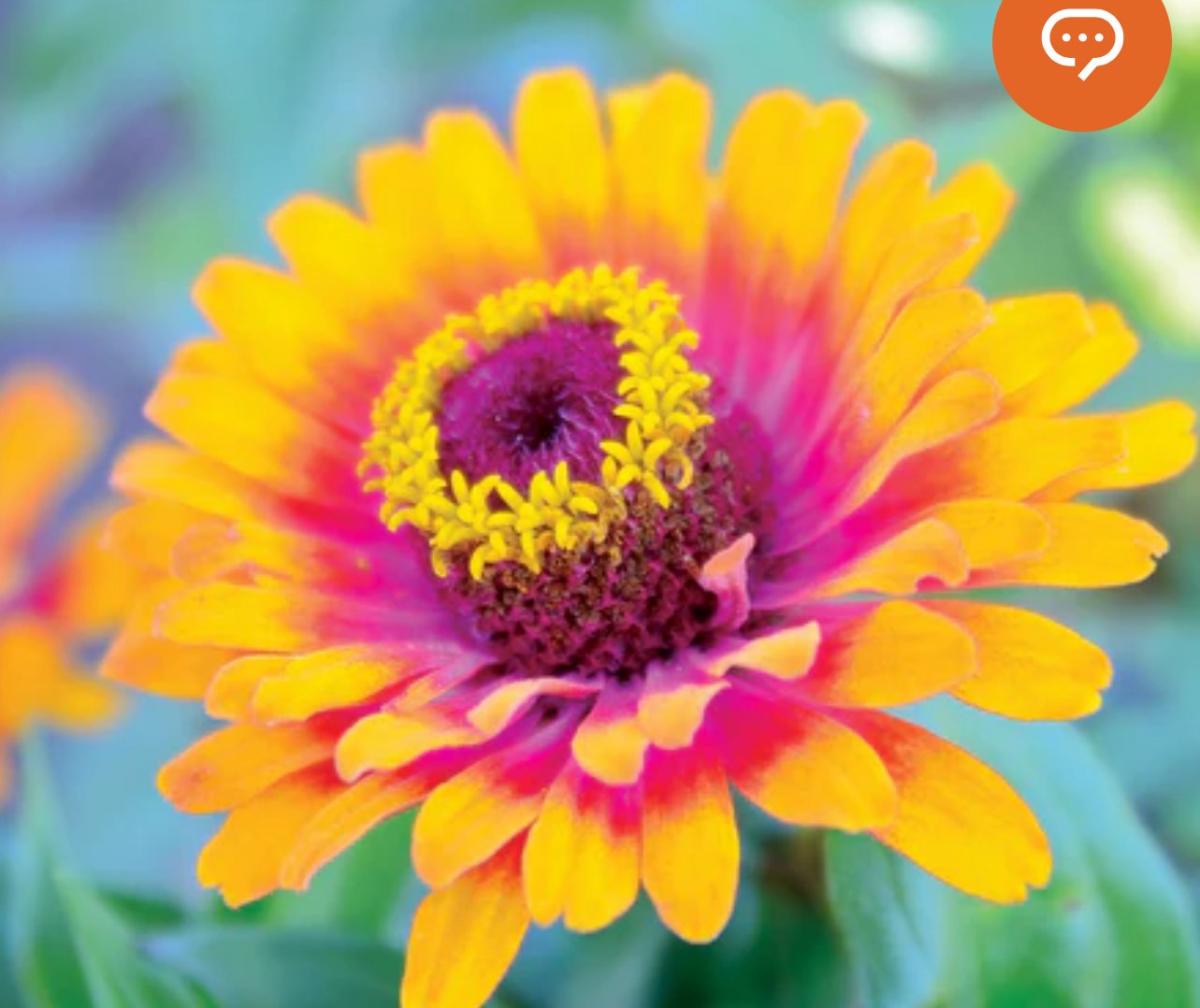
Zinnia ‘Zowie! Yellow Flame’
Zinnia elegans Add some shock factor to your garden palette with this AAS winner. The 2–3 inch, semi-double blooms have hot magenta-orange centers and are tipped with fiery yellow. They will produce a vibrant display on 24–30 inch plants all summer long.
Zinnias come in a diverse range of shapes, sizes, and colors—something for everybody. They are heat-loving plants, best sown at the same time that peppers are transplanted outside. Zinnias bloom during that part of summer when many other flowers have finished, from late July until the rainy season sets in, or until your first frost. (Territorial Seed)

Zinnia ‘Benary’s Giant’ mix
Benary's Giant Mix
The premium zinnia.
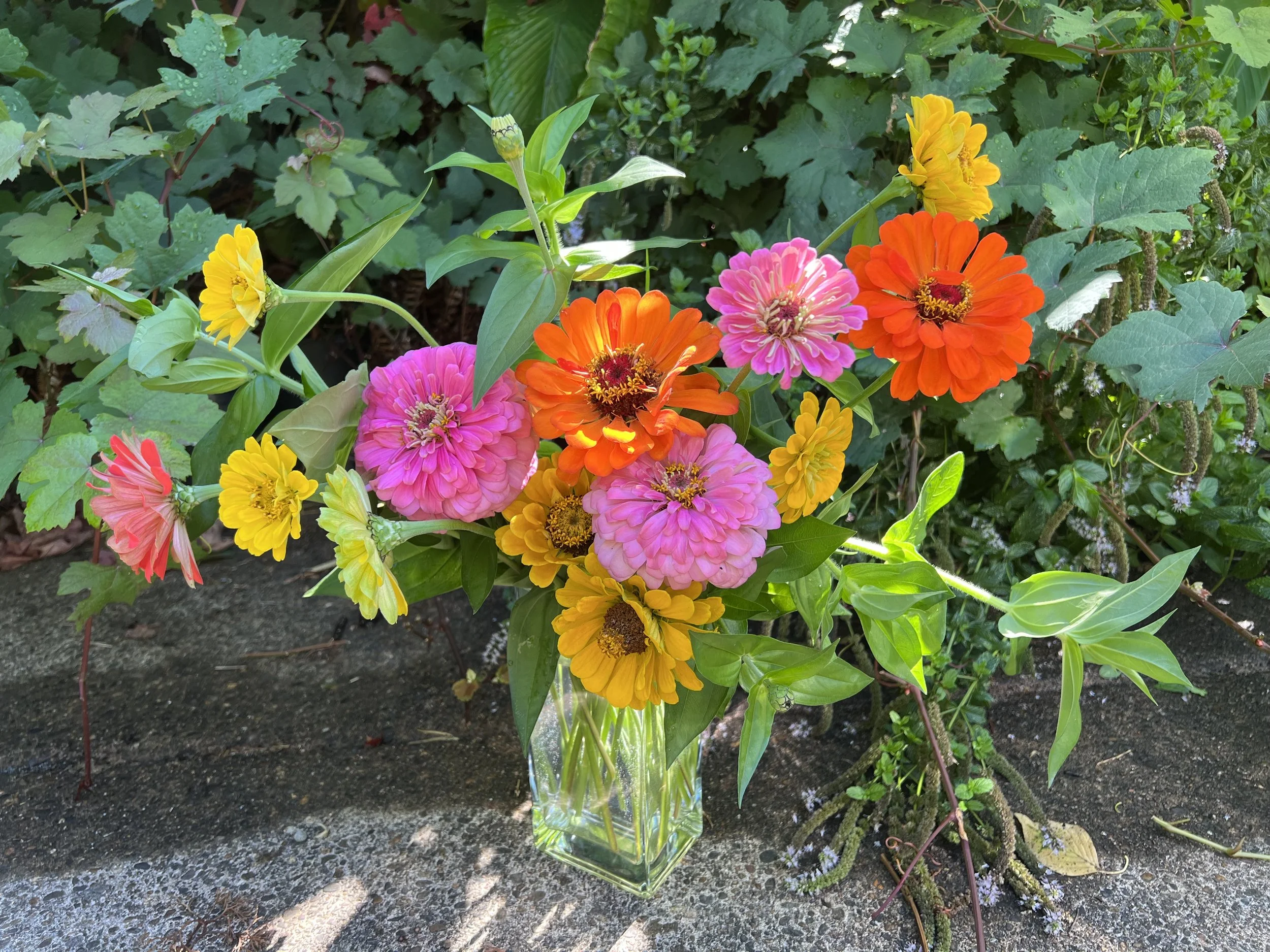
Recommended by the Association of Specialty Cut Flower Growers. Vigorous all-season producers hold up well in summer rain and heat all over the country. Densely petaled blooms are up to 6" across. Long-lasting standouts in bouquets. Cut-and-come-again flower, yielding multiple cuts over the season. Colors include deep red, orange, carmine rose, coral, lime, wine, purple, bright pink, white, salmon rose, scarlet, and golden yellow. (Johnny’s Selected Seeds)

Here at WILLS FARM
I have finally progressed
beyond the 18th century
(when USA currency was first produced)
and now accept donations via Venmo!
Click on the Venmo logo or the button above
to connect to my account
@willsfarm
Of course, cash is always accepted
(and appreciated)
when my donation box is out!
Thank you for your continued support in donating to help me purchase seeds and supplies.
— Sherry —