
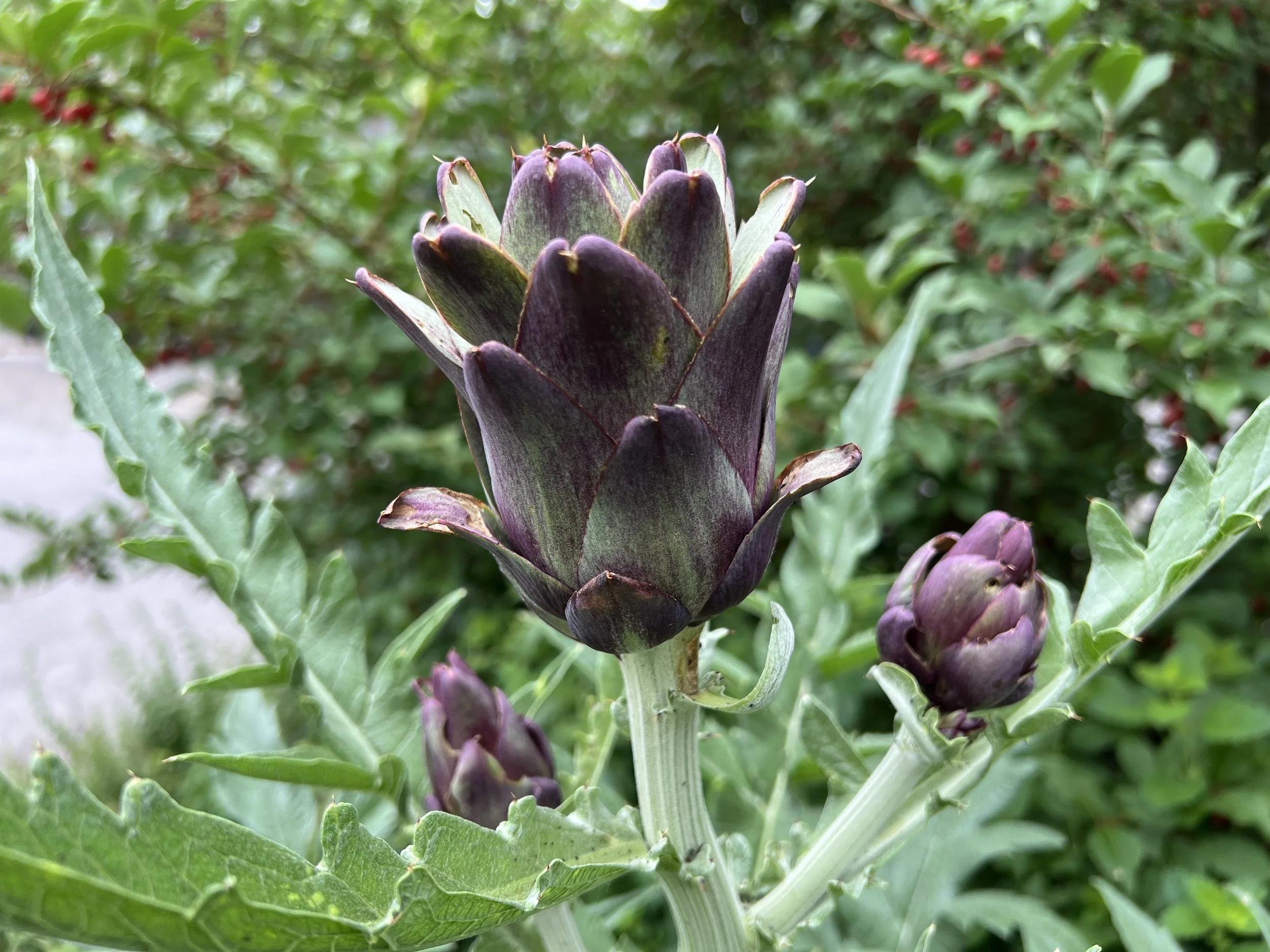
Growing artichokes
Artichokes need full sun to thrive and prefer a soil temperature of 65 to 75 deg. F. for optimal growth.
Artichokes are a tender perennial. When grown from seed, they do not always produce buds the first year.
NOTE: The variety I am offering in 2026 is bred to produce buds quickly, in the first year.
Plant 3 to 5 feet apart, as the leaves spread out. NOTE: ‘Colorado Red Star’ can be spaced at 18 inches apart, according to the seed source Baker Creek Heirloom Seeds.
So far, the rabbits have not bothered the artichokes, even the new growth. The more mature plants have some spines on the edges of their leaves, which I imagine would not feel good to a soft little rabbit mouth.
Damage can often be prevented by cutting them back to 8 to 10 inches before a hard frost and mulching with clean straw to protect the crowns. (I did not do this to mine planted last year, and even though the temperature got down to 10 deg. F. during our late winter freezing cold spell, at least two of my three plants survived and are growing back.)
When planting outdoors, work into the soil around each plant about a cup of general purpose fertilizer.
Avoid watering them from overhead.
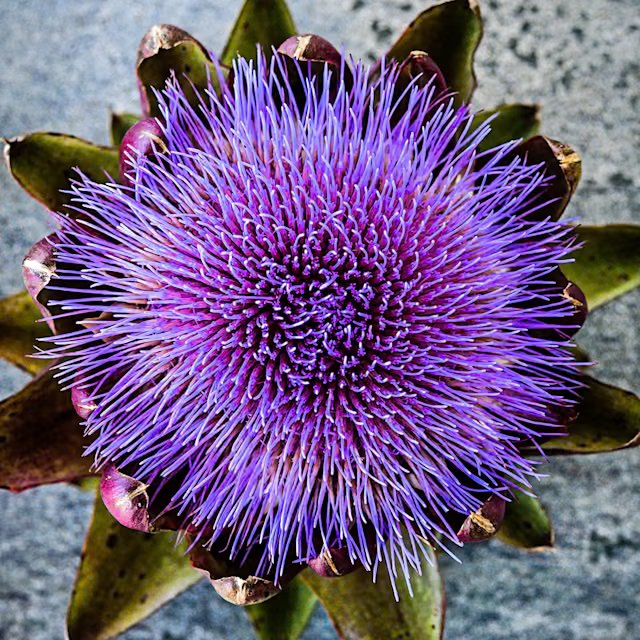
To harvest, cut the buds when still tight. If they get away from you, the blooms are beautiful.
2026
(Descriptions and photos are from the seed company websites unless otherwise noted.)
Artichoke ‘Colorado Red Star’
Tender perennial
An easier-to-grow artichoke, Colorado Red Star can be grown as an annual from seed in a wide range of climates. The bracts range from purplish-green to paintbrush strokes of plum, with a perfect globe shape. While artichoke has historically been a perennial vegetable requiring two years or a period of vernalization, breeder Keith Mayberry developed the Imperial Star, a variety that will develop heads early in the first year, with just 10 days of cool weather required! Colorado Red Star was the result of Keith crossing his green bract, Imperial Star, with purple varieties from Peru. The result: a 2- to 3-foot tall edible ornamental that produces stunning purple globes easily in the first season. Ideal for cold winter locations where overwintering perennial artichokes is difficult, and it is also perfect for hot southern climates where getting the requisite cold treatment for perennial types is not possible. (Baker Creek Heirloom Seeds)

Here at WILLS FARM
I have finally progressed
beyond the 18th century
(when USA currency was first produced)
and now accept donations via Venmo!
Click on the Venmo logo or the button above
to connect to my account
@willsfarm
Of course, cash is always accepted
(and appreciated)
when my donation box is out!
Thank you for your continued support in donating to help me purchase seeds and supplies.
— Sherry —