
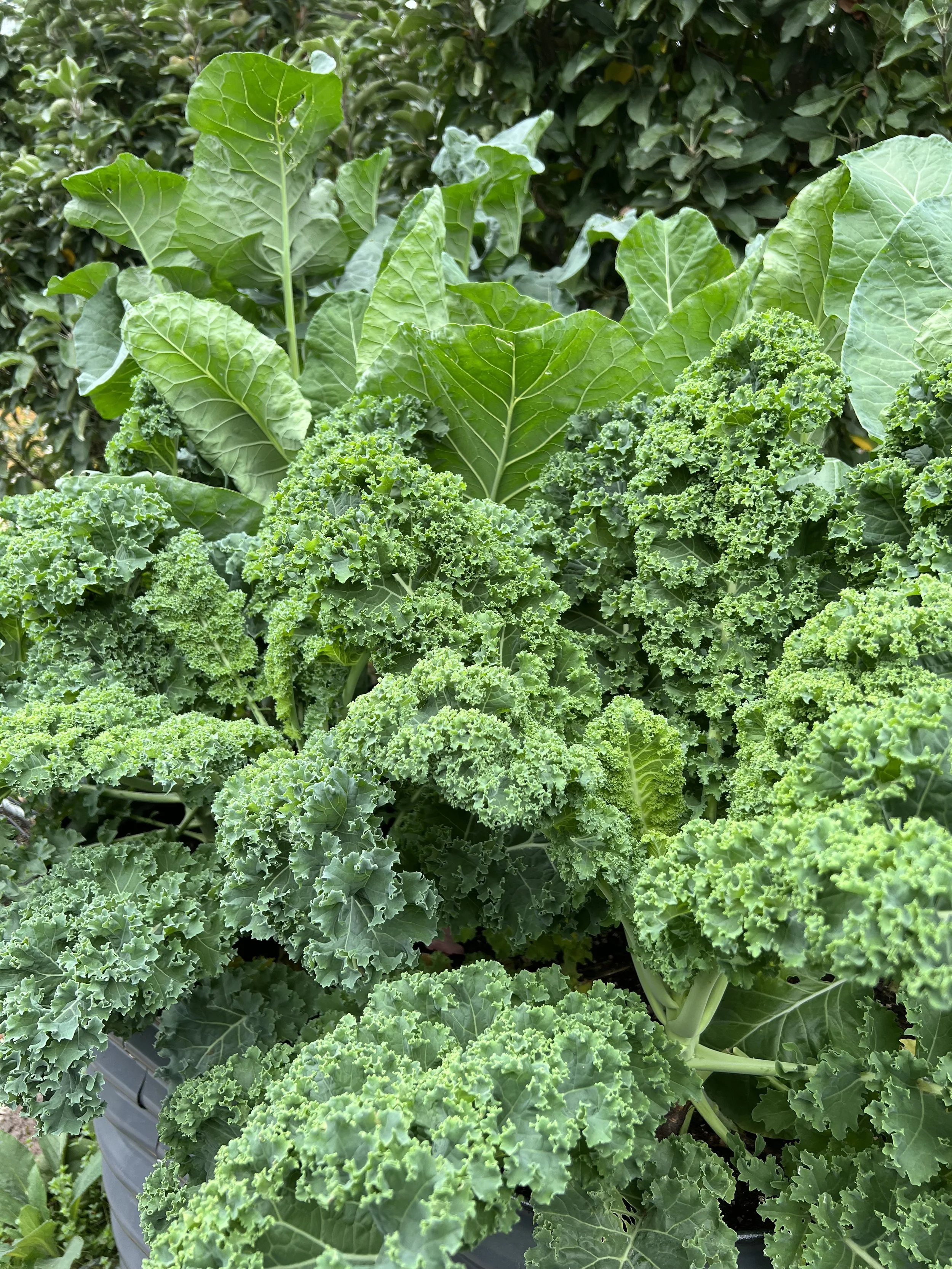
Growing kale
Kale grows best in cool weather, but I have found it does well all summer in my garden, especially the lacinato types.
Space plants 12 to 24 inches apart.
Add some general purpose fertilizer and a little compost to the soil before planting.
Harvest leaves from the outside of the plant at any time, from baby stage to maturity. Be careful not to damage the center growth point.
The red or purple varieties develop the most beautiful deep colors after the autumn frost. One year I didn’t pick from any of my dark kale plants because I so enjoyed just looking at them.
PLEASE NOTE: The plants on my farm table have NOT been hardened off. They are straight from the greenhouse.
You can do one of the following:
1. Expose them gradually to outdoor conditions over a week
-OR (as I do)-
2. Plant them immediately and give them protection from excess sun, wind, and rain for a week or two.
2026
(Descriptions and photos are from the seed company websites unless otherwise noted.)
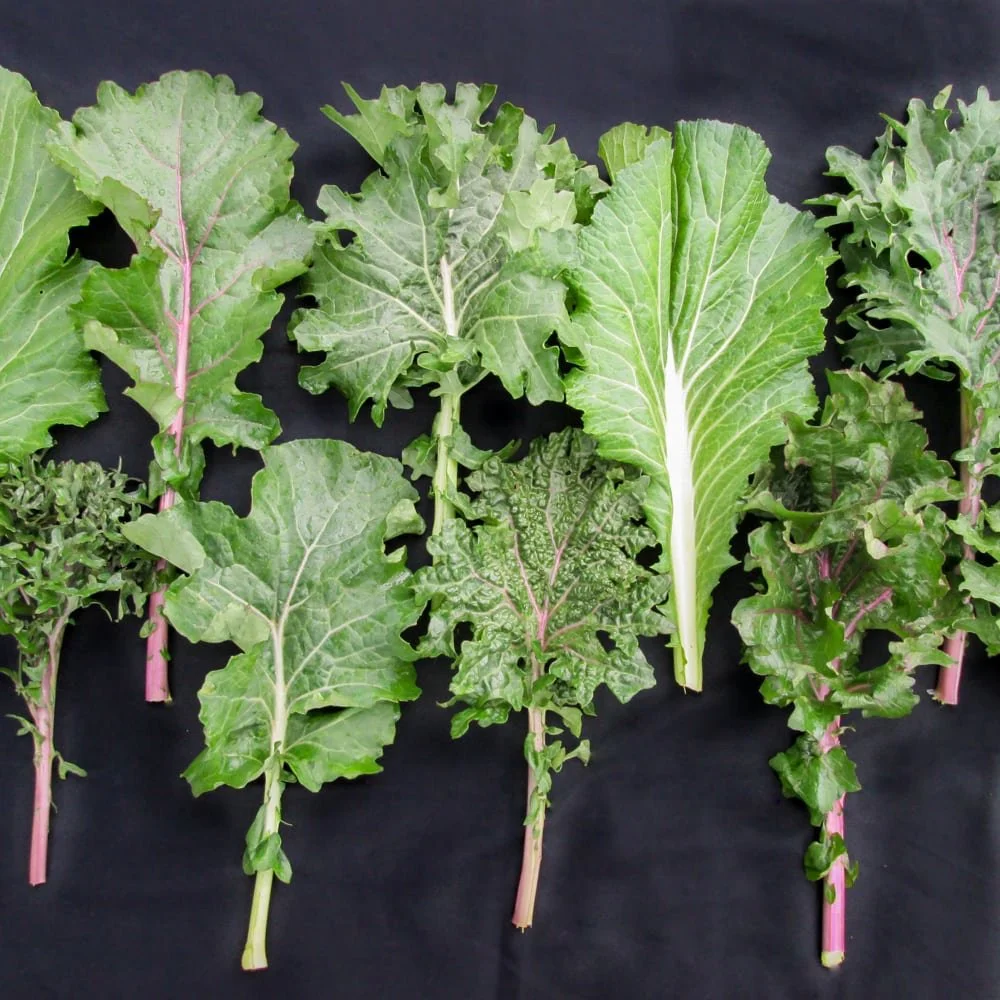
Kale, ‘Gulag Stars’
Gulag Stars
Brassica napus with Brassica rapa crosses.
25 days baby, 50-60 days full.
Incredible diversity unlike anything else. A mix of napus kales that have been crossed with B. rapa. Napus leaf types vary through the color spectrum from brilliant red to green to white Russian types; from super frilly to broad-leafed shapes; from skinny, short stems to broad, thick stems; and multiple combinations thereof. Occasional rapa leaf types vary from turnip-leaf to something that looks like a cross between pak choi and napa cabbage, though we have been selecting away from these rapa variations. Originally bud pollinated by Tim Peters in Oregon to bypass species incompatibility mechanisms. Interestingly, individual plants seem to self-pollinate well making selection of new varieties from the mix easier. We have selected new varieties of kale out of this crazy population in collaboration with Lane Selman and chef Tim Wastell of the Culinary Breeding Network. North Star Polaris and Simone Broadleaf were developed through this collaboration and both have been released as Open Source Seed Initiative pledged varieties. Open pollinated variety. (Adaptive Seeds)
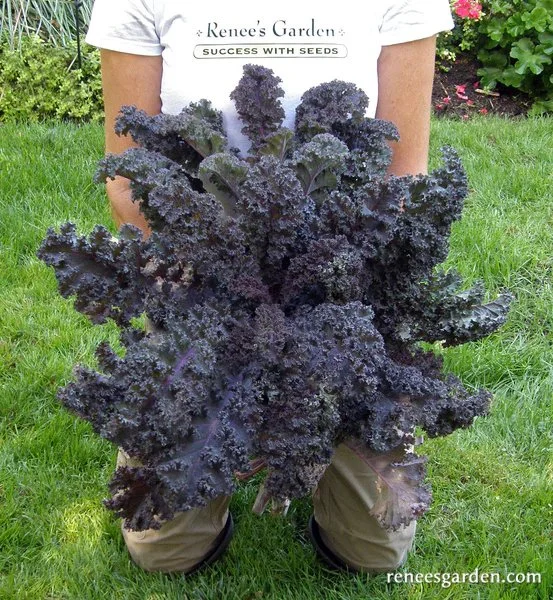
Purple Moon
Purple Moon
Purple Moon has beautiful frilled & ruffled, deep purple leaves that are loaded with great flavor & super nutrition. The plants germinate and grow vigorously, and can be harvested over a long, productive season. Purple Moon has a mild and nutty flavor that is perfect for fresh salads or quick cooking. (Renee’s Garden)
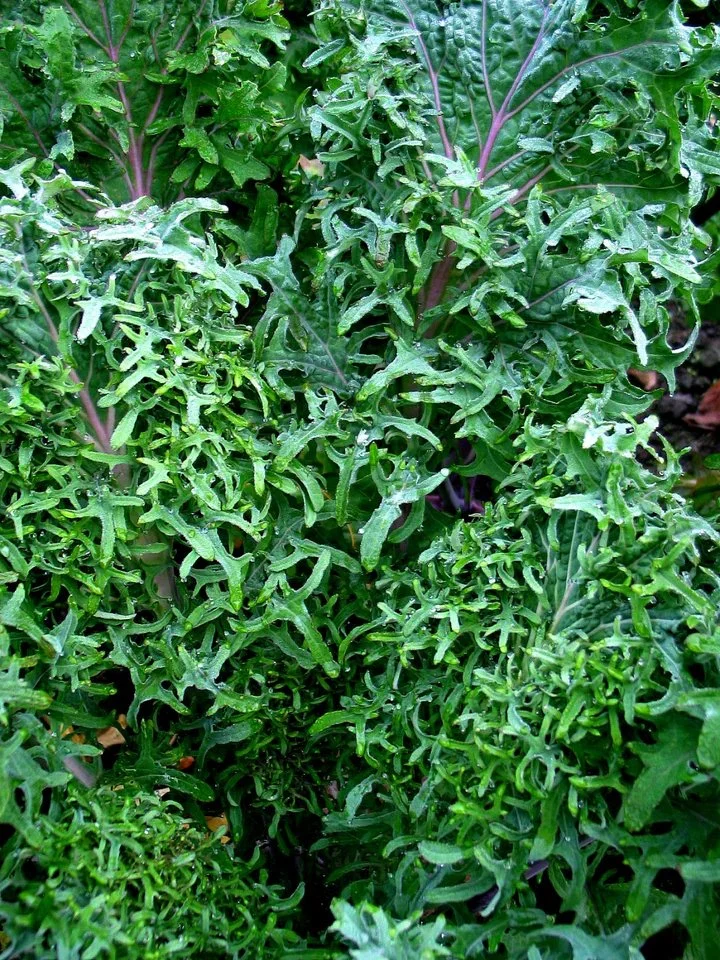
'Russian Frills’
Russian Frills
55 days. Enjoy a lovely reintroduction, originally bred in Oregon and then rediscovered on a farm in Belgium by our good friends at Adaptive Seeds who brought it back to the marketplace. Purple-veined mature leaves develop secondary and tertiary degrees of frilling, giving the plants an amazingly voluminous and starry appearance when fully mature. Like other Siberian types, it is extremely winter-hardy while retaining a tender eating quality that is unsurpassed. Baby leaves are virtually identical to regular Red Russian and are an excellent addition to salad/braising mixes. (Uprising Seeds)
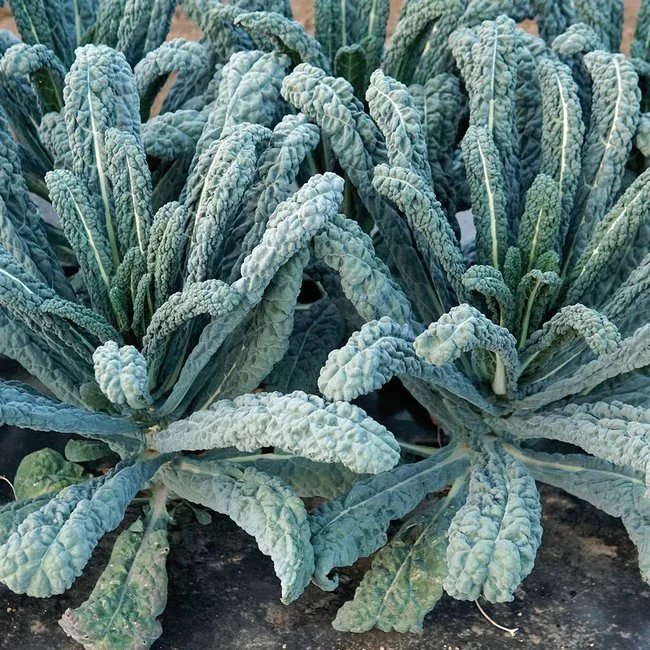
Ebony
Ebony
62 days. Enjoy a long season of hearty, fresh greens with this new, bolt-resistant lacinato. Ebony’s compact habit and deeply puckered, thick leaves are a great fit for the late fall and early spring gardens, as the cold-tolerant plants are built for hunkering down under a blanket of snow. At 22 inches tall, they produce a continuous harvest of richly colored, dark slate-blue leaves for soups, stews, salads and more. (Territorial Seed)
Holy Kale! blend MIX
54-65 days. Add some WOW factor to the garden and dinner table with this stunning kale blend. A dazzling array of colors, shapes and textures. Contains Nero di Toscana, Halbhoher Gruner Krauser, Roulette, Dwarf Green Curled, Scarlett and Fizz. (Territorial Seed)
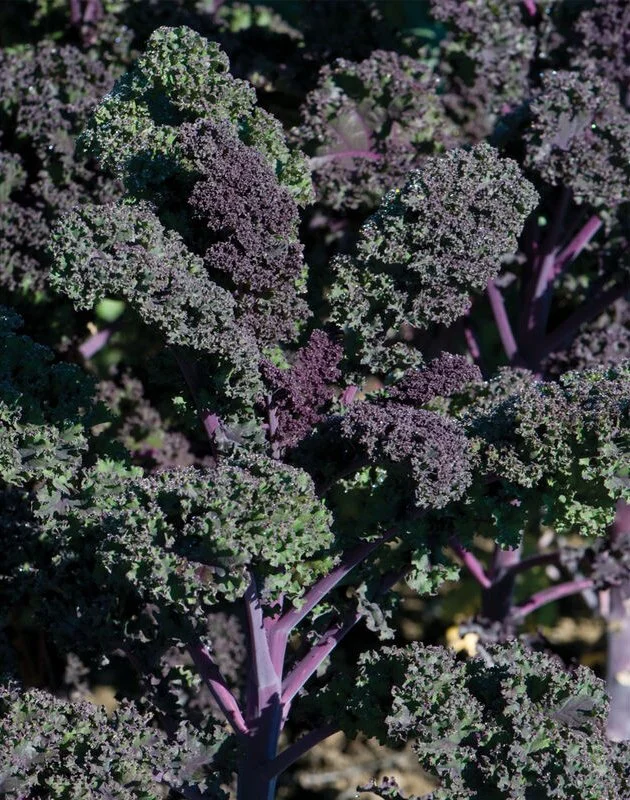
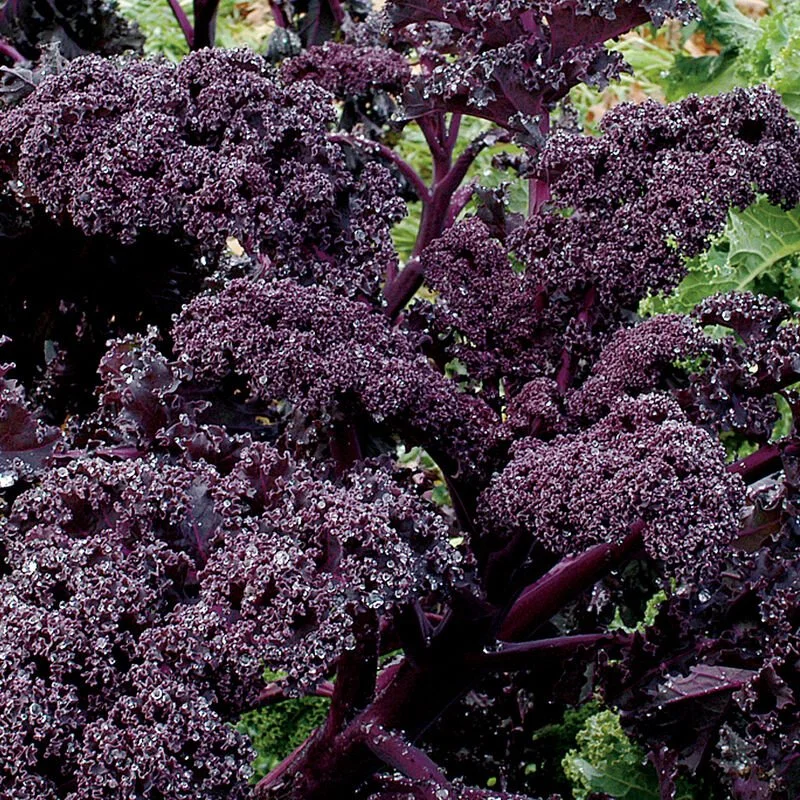
Redbor
Frilly deep purple-red leaves.
55 days. Extremely uniform plants. Similar to Winterbor in everything but color. For garnishing and eating. Flavor, color, and curling are enhanced by cold weather. F1 hybrid variety. (Johnny’s Selected Seeds)
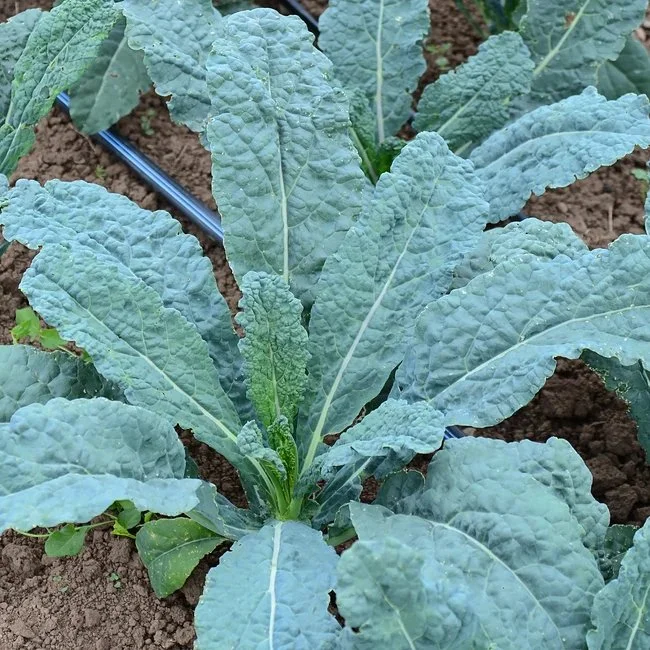
Black Magic
Black Magic
61 days. Conventional breeding, not magic, has spawned this improved lacinato. We love its uniformity, bolt resistance, cold tolerance, and the neat, tighter habit that sets it apart from others in its class. A superior performer from spring plantings, the vigorous plants produce easy-to-harvest rosettes of deeply savoyed and pigmented leaves. Growing to 15 inches wide and 19 inches tall, Black Magic yields an abundance of flavorful greens for continuous picking or whole-plant harvest. (Territorial Seed)
Below are varieties offered in 2025. Some may also be available this year. I’m still working on updating the site.

Kale ‘Mamba’ (photo from Johnny’s Selected Seeds)
Kale ‘Mamba’
Vigorous, hybrid Lacinato type.
Mamba is a robust variety with high yields of upright, exceptionally uniform plants. The attractive dark green leaves are deeply savoyed and have good flavor. Strong seedling emergence for vigorous, productive plants. Lacinato or "dinosaur" type kale. (Johnny’s Selected Seeds)

Kale ‘Dazzling Blue’
Kale ‘Dazzling Blue’
50-60 days. This Oregon-bred variety is a striking twist on the strap-leaf style kales. It sports puckered, brilliant blue-green leaves highlighted with shocking pink midribs. Along with its showy appearance, Dazzling Blue proves to be especially cold tolerant. Bred by Hank Keogh. Open pollinated. (Territorial Seed)

Here at WILLS FARM
I have finally progressed
beyond the 18th century
(when USA currency was first produced)
and now accept donations via Venmo!
Click on the Venmo logo or the button above
to connect to my account
@willsfarm
Of course, cash is always accepted
(and appreciated)
when my donation box is out!
Thank you for your continued support in donating to help me purchase seeds and supplies.
—Sherry—